

Concussion Clinic
Pediatric-focused concussion care from highly skilled specialists
Our clinic treats infants, children, and adolescents with suspected concussions due to bad falls, sports injuries, or other causes. We quickly confirm the diagnosis and whether treatment is necessary. Parents turn to us because we successfully treat complex cases, including lingering symptoms and children who have had multiple concussions.
What is a Concussion?
A concussion is a type of traumatic brain injury (TBI) caused by a bump, blow, or jolt to the head or by a hit to the body that causes the head and brain to move quickly back and forth. This fast movement can cause the brain to bounce around or twist in the skull, creating chemical changes in the brain and sometimes stretching and damaging the brain cells.
How is a Concussion Evaluated?
We use research-based methods, like computerized ImPACT® testing, to assess your child’s symptoms and their severity. This tool enables us to score specific brain activities like memory, attention span, and problem-solving. Repeating testing at various points in your child’s treatment helps us determine whether the therapies are working as expected.
How is a Concussion Treated?
The best concussion treatment depends on how the injury impacts your child.
Activity modification
Treatment typically includes activity modification, such as rest, limited participation in school, and breaks from screen time and sports. As your child feels better, we will develop a plan for a gradual return to these activities. We provide notes to your child’s school explaining accommodations that may be necessary. This may involve finding a quiet place to rest between classes or printouts to avoid looking at screens and whiteboards.
Physical Therapy
Children with dizziness or balance issues may benefit from specialized therapy. Physical therapists with certification in vestibular therapy guide your child through activities that retrain the brain and eyes. Consistently performing these exercises can lead to fewer dizzy spells and balance issues.
Concussion Awareness Quick Guide
A concussion is a type of traumatic brain injury (TBI) caused by a bump, blow, or jolt to the head or by a hit to the body that causes the head and brain to move quickly back and forth. This fast movement can cause the brain to bounce around or twist in the skull, creating chemical changes in the brain and sometimes stretching and damaging the brain cells.
If a child, student, or athlete experiences a blow to the head or body and reports any of the following symptoms, they may have a concussion:
- Balance problems or dizziness
- Concentration or memory problems
- Confusion
- Double or blurry vision
- Headache or "pressure" in head
- Loss of consciousness
- Nausea or vomiting
- Ringing ears
- Sensitivity to light
- Sensitivity to noise
- Sluggish, hazy, foggy, or groggy feeling
- Not “feeling right” or “feeling down”
To schedule an appointment at our Concussion Clinic, call 954-538-5566.
Source: CDC’s Heads Up Program. Created through a grant to the CDC Foundation from the National Operating Committee on Standards for Athletic Equipment (NOCSAE).
If you are a coach, parent, or school staff, the following signs may indicate a child has a concussion:
- Appears dazed or stunned.
- Answers questions slowly or repeats questions.
- Can't recall events prior to or after a hit or fall.
- Forgets instructions, is confused about assignments, position, game, score, or opponent.
- Moves clumsily.
- Loss of consciousness (even briefly).
- Shows mood, behavior, or personality changes.
To schedule an appointment at our Concussion Clinic, call 954-538-5566.
Source: CDC’s Heads Up Program. Created through a grant to the CDC Foundation from the National Operating Committee on Standards for Athletic Equipment (NOCSAE).
When in doubt, sit them out!
- Remove Athlete/Student from Play Immediately: They must be removed from play, including sports practices/games, Physical Education class, and physical activity at recess, on the same day the injury occurred.
- Seek Medical Attention Right Away: Only a health care provider can assess the injury and determine when it is safe to return to activities.
- Inform Parents/Coaches
- Coaches: Inform the athlete's parents about the possible concussion.
- Parents: Tell your child's coach about any previous concussions.
- Do Not Return to Play Too Soon: The brain needs time to heal. A repeat concussion while the brain is healing can be very serious, affecting the athlete for a lifetime, and can even be fatal.
- Obtain Written Instructions: Coaches must ask for written instructions from the health care provider for the return-to-play process.
To schedule an appointment at our Concussion Clinic, call 954-538-5566.
Source: CDC’s Heads Up Program. Created through a grant to the CDC Foundation from the National Operating Committee on Standards for Athletic Equipment (NOCSAE).
If your child or athlete has a bump, blow, or jolt to the head or body and exhibits any of the following signs, call 911 or take them to the emergency department right away, as these could indicate a dangerous collection of blood on the brain:
- One pupil is larger than the other.
- Drowsiness or inability to wake up.
- A headache that gets worse and does not go away.
- Repeated vomiting or nausea.
- Slurred speech, weakness, numbness, or decreased coordination.
- Convulsions or seizures.
- Increasing confusion, restlessness, agitation, or unusual behavior.
- Loss of consciousness (passed out/knocked out).
To schedule an appointment at our Concussion Clinic, call 954-538-5566.
Source: CDC’s Heads Up Program. Created through a grant to the CDC Foundation from the National Operating Committee on Standards for Athletic Equipment (NOCSAE).
An athlete’s return to school and sports should be a gradual process that is approved and carefully managed and monitored by a health care provider and could take days, weeks, or months. When available, coaches should work closely with the team’s certified athletic trainer. The athlete should only advance to the next step if they remain symptom-free at the current step.
Below are five gradual steps that coaches, along with a health care provider, should follow to help safely return an athlete to play over days, weeks, or months.
BASELINE: Athlete is back to their regular school activities, is no longer experiencing symptoms from the injury when doing normal activities, and has a green light from their health care provider to begin the return to play process. An athlete should only move to the next step if they do not have any new symptoms at the current step.
STEP 1: Begin with light aerobic exercise only to increase an athlete’s heart rate. This means about 5 to 10 minutes on an exercise bike, walking, or light jogging. No weightlifting at this point.
STEP 2: Continue with activities to increase an athlete’s heart rate with body or head movement. This includes moderate jogging, brief running, moderate-intensity stationary biking, and moderate-intensity weightlifting (less time and/or less weight than a typical routine).
STEP 3: Add heavy non-contact physical activity, such as sprinting/running, high-intensity stationary biking, regular weightlifting routine, non-contact sport-specific drills (in three planes of movement).
STEP 4: An athlete may return to practice and full contact (if appropriate for the sport) in controlled practice.
STEP 5: An athlete may return to competition.
Remember
If an athlete's concussion symptoms return or new symptoms appear, they should stop the activity and contact their health care provider. They can resume at the previous symptom-free step after getting the provider's approval. Also, talk with an athlete’s parents if you notice their concussion symptoms come back after they return to play.
To schedule an appointment at our Concussion Clinic, call 954-538-5566.
Source: CDC’s Heads Up Program. Created through a grant to the CDC Foundation from the National Operating Committee on Standards for Athletic Equipment (NOCSAE).
Supporting a student recovering from a concussion requires a collaborative approach among parents, school professionals (e.g., teachers, coaches, school nurse, speech-language pathologist, counselor), and health care providers, as they may need accommodations during recovery.
Students recovering from a concussion may need temporary support and accommodations, which can be gradually removed as symptoms decrease:
- Take rest breaks as needed.
- Spend fewer hours at school.
- Be given more time to take tests or complete assignments.
- Receive help with schoolwork.
- Reduce time spent reading, writing, or on the computer.
- School Staff should watch for increased problems with attention, memory, and changes in behavior (e.g., irritability, impulsive behavior).
To schedule an appointment at our Concussion Clinic, call 954-538-5566.
Source: CDC’s Heads Up Program. Created through a grant to the CDC Foundation from the National Operating Committee on Standards for Athletic Equipment (NOCSAE).
Sports are a great way for children and teens to stay healthy and can help them do well in school. As a youth sports coach, your actions create the culture for safety and can help lower an athlete’s chance of getting a concussion or other serious injury. Aggressive and/or unsportsmanlike behavior among athletes can increase their chances of getting a concussion or other serious injury. Here are some ways you can help keep your athletes safe.
Talk with athletes about the importance of reporting a concussion.
- Talk with athletes about any concerns they might have about reporting their concussion symptoms.
- Make sure to tell them that safety comes first and you expect them to tell you and their parent(s) if they think they have a concussion.
Create a culture of safety at games and practices.
- Teach athletes ways to lower the chances of getting a concussion.
- Enforce the rules of the sport for fair play, safety, and sportsmanship.
- Tell athletes that you expect good sportsmanship at all times, both on and off the playing field.
Ensure athletes avoid unsafe actions.
- Striking another athlete in the head.
- Using their head or helmet to contact another athlete.
- Making illegal contacts or checking, tackling, or colliding with an unprotected opponent.
- Trying to injure or put another athlete at risk for injury.
Keep up-to-date on concussion information.
- Review your state, league, and/or organization’s concussion guidelines and protocols.
- Take a training course on concussion, like the CDC's HEADS UP concussion training at no cost.
- Download CDC’s HEADS UP app and a list of concussion signs and symptoms that you can keep on hand.
Check out the equipment and sports facilities.
- Make sure all athletes wear a helmet that fits well and is in good condition when appropriate for the sport or activity.
- There is no “concussion-proof” helmet, so it is important to enforce safety rules that protect athletes from hits to the head and when a helmet falls off during a play.
- Work with the game or event administrator to remove tripping hazards and ensure that equipment, such as goalposts, has padding that is in good condition.
Keep emergency contact information handy.
Source: CDC’s Heads Up Program. Created through a grant to the CDC Foundation from the National Operating Committee on Standards for Athletic Equipment (NOCSAE).

Pediatric Concussion Symptoms
Highlights of our program include:
-
Expertise
Board-certified pediatric sports medicine doctors with additional training in concussion care lead our program.
We stay current on the latest treatment methods so your child receives the best care. This expertise enables us to detect and manage small details that make a difference in your child’s recovery.
-
Easy Access
The sooner your child undergoes a concussion evaluation, the better.
We see patients in 2-3 business days. Our experts are in clinic locations throughout South Florida, making it easier to receive care close to home.
-
Personalized care and Team approach
We offer all the services your child may need.
If the brain injury is more severe, we coordinate care from our extended team. The team includes pediatric experts in physical medicine, neurology and neuropsychology
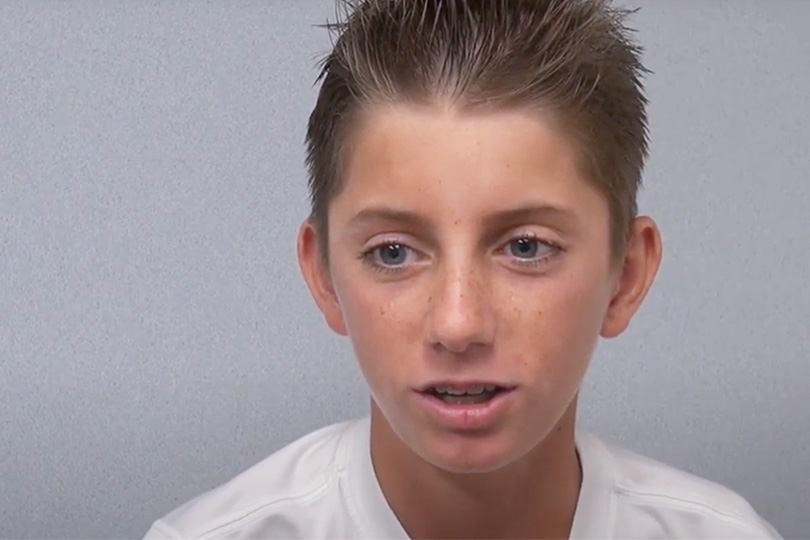
Cameron's Concussion Care
Our [U18] Sports Medicine Concussion Clinic experts were there for Cameron after he collided with a classmate during a game of flag football.
Related Providers
-


 Michael Dressing, MD Pediatric Sports Medicine, Non-Surgical Orthopedics (Pediatric)
 -
 Matthew Fazekas, MD Pediatric Sports Medicine, Non-Surgical Orthopedics (Pediatric)
 -
 Virmarie Quinones-Pagan, MD Pediatric Physical Medicine and Rehabilitation
 -
 Stanley Szybinski, MD Pediatric Sports Medicine, Non-Surgical Orthopedics (Pediatric)
Call the Concussion Clinic to schedule an appointment.


