
Back to School: Tips for Better Sleep Habits
July 09, 2026

Updated July 9, 2026
Sleep is vitally important for our children. It's not surprising that when kids start winding down from the relative sleep freedom of the summer and back to the structure of the school year, it can be challenging for many of them to make the needed nighttime adjustments.
Aaron Willis, DO, a pediatric pulmonologist and sleep medicine specialist at Joe DiMaggio Children's Hospital, explains why children need a certain amount of sleep every day and tips for helping them get better sleep as they return to school.
How Many Hours of Sleep Do Children Need?
According to the American Academy of Pediatrics (AAP), school-age children require the following hours of sleep per day:
- Preschoolers (3 to 5): 10 to 13 hours, including naps
- Children (6 to 12): 9 to 12 hours
- Teenagers (13 to 18): 8 to 10 hours
Meeting these hours can be a challenge, especially when balancing academic requirements, friends, screen time, social media, and early school start times.
With this in mind, the AAP estimates that up to sleep problems affect 25 to 50% of children and 40% of adolescents, and that chronic sleep loss in this age group is now considered a public health emergency with increased risk for substance abuse, mental health problems, as well as car crashes and sports injuries.
It is also important to understand that during puberty, there is a shift in the biology of your teen’s sleep cycle or circadian rhythm. This means that hormones that help promote sleepiness and wakefulness in your teen are secreted later, which can lead to severe sleep challenges, especially early in the school year.
That's why it's important to start working on your child's sleep schedule a few weeks before the school year starts to ensure that their school transition is a smooth one.
7 Tips to Help Your Child Get Good Sleep
Some helpful sleep tips I recommend include:
- Set a consistent bedtime every day, including the weekend. This is called sleep regularization.
- Avoid late-evening exercise, as it can surprisingly be very activating rather than tiring.
- Avoid daytime napping for teens, as this can decrease their sleep drive and promote delayed sleep onset.
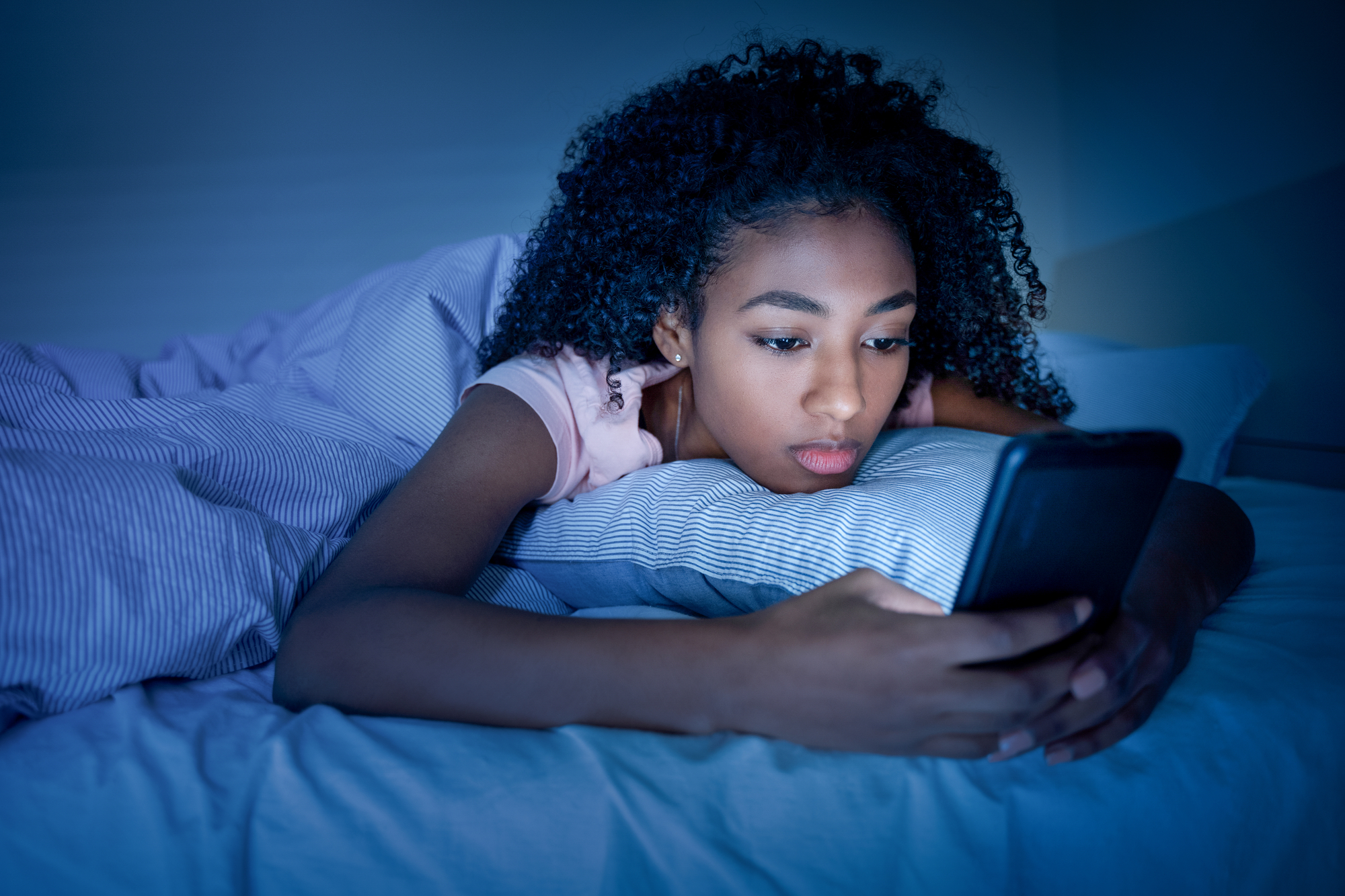
- Avoid using a computer, phone, or tablet at night. Set these devices to night mode to avoid certain wavelengths that may decrease melatonin and sleepiness.
- Only use their bed for sleep at night. Don't hang around or sit on the bed for long hours during the daytime.
- Keep bedroom cool and dark to promote a restful environment.
- No caffeinated beverages (i.e., energy drinks, soda, coffee) after 12 pm.
Two special tips I recommend include a technique called sleep restriction as well as bright light exposure.
Sleep Restriction
Sleep restriction “restricts” time in bed so that when your teen finally gets into bed, they can fall asleep faster and without frequent nighttime awakenings.
This involves taking the average number of hours of sleep (not less than 5.5 hours) and setting that as their sleep time.
For example, if your child sleeps for about 6 hours per night, we will set their sleep time from 12 am to 6 am. While this may seem harsh, after about a week, they will experience a significant improvement in the time it takes them to fall asleep.
The next step is to gradually advance the time they go to bed earlier by about 30 minutes every 3-5 days, if possible, until eventually they are on a more regular sleep cycle.
One thing to note is that after moving the sleep time earlier, if they start to experience trouble falling asleep or staying asleep, you should go back to the previous later sleep time and try again in a few days.
Increase Bright Light Exposure in the Morning
Since light is the strongest cue for training your circadian rhythm, early morning bright light exposure can help with insomnia and circadian rhythm disorders in teens.
Typically, we recommend using a light box that produces 10,000 lux and positioning it between 16" and 24" away from the face. After waking up in the morning, exposing your teen to about 30 minutes of bright light can help advance their sleep timing and promote wakefulness for the day.
Hopefully, these tips are helpful, and we can ensure that the transition back to school is seamless.

Medically Reviewed by Aaron Willis, DO
This content has been medically reviewed to ensure clinical accuracy.

Related Providers
-


 Aaron Willis, DO Pediatric Pulmonology, Pediatric Sleep Medicine