
Predicting the Likelihood of Complications During Cardiac Procedures for Children
February 12, 2026
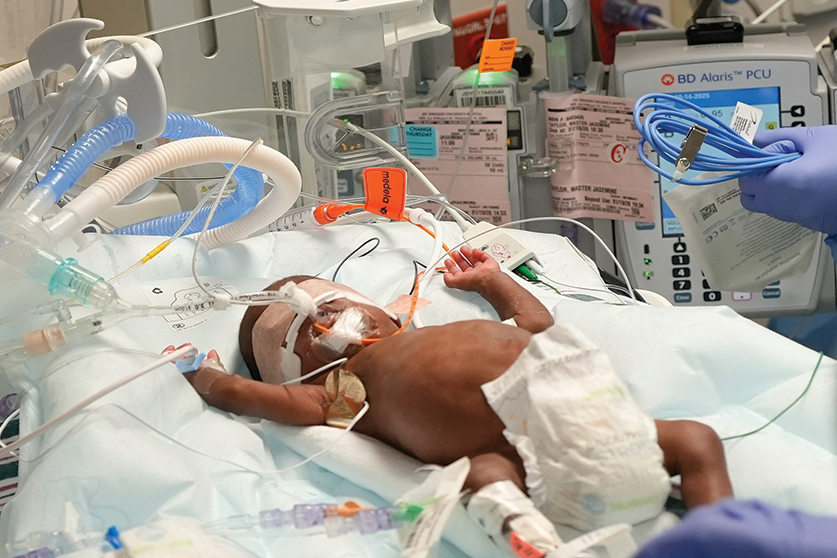
America’s fastest-growing registry of data on high-risk cardiac catheterization cases is housed at Joe DiMaggio Children’s Hospital in Hollywood, but its life-saving impact extends far beyond South Florida.
The Catheterization RISk in Pediatrics (CRISP) registry is a database of more than 10,000 procedures performed at 20 congenital cardiac centers in the U.S. where complications occurred. For each child, an internal score that quantifies risk factors (age, weight, diagnosis, etc.) now helps guide the treatment plans of interventional cardiologists performing transcatheter-based procedures on their own congenital heart disease patients.

“CRISP assists in predicting when a serious adverse event is likely to occur in the cardiac catheterization lab, allowing the team to hopefully avoid the event or be prepared if it does occur,” said Thomas Forbes, MD, a pediatric cardiologist and chief of Pediatric Cardiac Services at Joe DiMaggio Children’s Hospital. “We’re saving lives by predicting circumstances that are likely to arise and being prepared to expedite care in a way that leads to better outcomes.”
The registry also helps determine whether the riskier cases are better resolved in the cath lab, through a hybrid procedure that combines a cardiac interventionalist and surgeon or through traditional surgery with a surgeon alone.
Dr. Forbes founded the CRISP registry in 2007 and brought the database with him to Joe DiMaggio in 2022. The registry is the fastest-growing of its type in the world, with 20 centers already participating and another 30 currently being enrolled.
While the CRISP registry is helping physicians predict complications in the catheterization lab, it has, since 2018, also worked with the FDA and industry to help develop and get earlier approval of medical devices in the U.S.
“This important work benefits every child having a cardiac procedure here at Joe DiMaggio Children’s Hospital and in children’s hospitals around the world. Being part of the majority of U.S. clinical trials allows our patients to receive earlier access to state-of-the-art equipment, care, and allows us to lead and contribute to advancements in the field,” said Caitlin Stella, MPH, Chief Executive Officer of Joe DiMaggio Children’s Hospital.
Because of registry data, the first stent approved to open narrowed vessels in the pulmonary artery was approved in the U.S. More recently, the registry allowed another device to be introduced in the U.S. that helps close a vessel in infants that are born prematurely, with Joe DiMaggio currently the highest enroller in America for this trial.
“Collaboration with both the FDA and industry through the registry has allowed Joe DiMaggio to be seen as the epicenter for pediatric cardiovascular device research in the U.S.,” said Dr. Forbes. “We’re seeing devices being approved in half the time it used to take using CRISP registry data. I’m very blessed to be at Joe DiMaggio, an institution that has the capability and desire to truly further care and make a difference in the lives of critically-ill children.”