
Marfan Clinic
Expert care for Marfan syndrome with comprehensive genetic testing, cardiology evaluations, and coordinated multidisciplinary support.
Recognized by The Marfan Foundation for its commitment to high-quality, multidisciplinary care, the Marfan Clinic at Joe DiMaggio Children's Hospital provides specialized care for patients with Marfan Syndrome (MFS) and related connective tissue disorders.
It is jointly led by Roman Yusupov, MD, from the Division of Genetics, and pediatric cardiologists from the children hospital's Heart Institute.
During each visit, patients receive a comprehensive genetic and cardiology evaluation, including an echocardiogram. Additional pediatric specialists with expertise in Marfan syndrome and connective tissue disorders, are available for consultation during or shortly after the visit, including:
What is Marfan Syndrome?
Marfan syndrome (MFS) is a connective tissue disorder that involves the ocular, skeletal, and cardiovascular systems. MFS affects about 1 in 5,000 people. It can appear at any age, although usually it starts manifesting during adolescence, and may present differently in each patient. People with Marfan are often very tall, thin, and loose-jointed. Many have heart and blood vessel issues, such as a weakness in the aorta or leaky heart valves. They also may have problems with their bones, eyes, skin, nervous system, or lungs.
Causes of Marfan Syndrome
MFS affects connective tissues, the proteins that support skin, bones, blood vessels, and other organs throughout the body. One of these proteins is fibrillin, and a defect in the fibrillin gene causes Marfan syndrome. The condition is generally inherited, and about 75 percent of patients have an affected parent. In some patients, symptoms are mild; in others, they may be severe. Scientists are studying MFS to better understand this complex condition and its treatment.
Diagnosing and Treating Marfan Syndrome
Physicians may rely on observation and a patient’s medical history to diagnose MFS. They can review family medical history to see if others might have the syndrome.
After a patient is clinically diagnosed, genetic testing might identify a specific mutation. A genetic test for the same mutation can also be performed to determine if other family members are affected.
Because Marfan affects several systems, patients are often cared for by several different types of specialists. An individualized treatment plan is developed based on each patient’s condition.
Although there currently is no cure for Marfan, patients can choose from a wide range of treatment options in an effort to minimize, and sometimes prevent, complications. Depending on the patient’s condition, regular exams can include annual skeletal evaluations to identify any changes in the spine or sternum. Frequent eye exams can be performed in an effort to detect any vision problems, and heart and blood vessels may be evaluated as well.
What to Expect at Your First Clinic Visit?
Initial appointments at the Marfan Clinic are comprehensive, typically lasting about two hours. Here's what families can expect:
- Detailed History: Discussion of medical history, family history, and current symptoms.
- Physical Examination: Thorough assessment looking for characteristic features.
- Echocardiogram: A 45-minute to one-hour cardiac ultrasound to evaluate the heart and aorta.
- Genetic Testing: If the diagnosis is uncertain, testing helps confirm Marfan syndrome or related conditions.
- Treatment Planning: Discussion of medications, lifestyle modifications, and follow-up care.
The clinic schedules 5-8 patients (both new and follow-up, pediatric and adult) each month, with appointments available on Fridays. Due to the thorough nature of each visit, there may be a waiting period, though the clinic can often see urgent cases through its regular genetics clinic.
Related Connective Tissue Disorders
While MFS accounts for the majority of patients, the clinic also treats several related connective tissue disorders:
- Loeys-Dietz Syndrome: A more severe condition that can affect blood vessels throughout the body, from head to toe.
- Ehlers-Danlos Syndrome: Another connective tissue disorder with its own unique challenges.
- Other rare genetic conditions: Includes patients with aortic root dilation without a specific genetic diagnosis.
For more information about the Marfan Clinic, call:
954-265-3437
Celebrating 15 Years of Specialized Care for Marfan Syndrome
Learn how Joe DiMaggio Children's Hospital's Marfan Clinic has helped diagnose heart, orthopedic, and eye conditions in children as well as their siblings and parents.


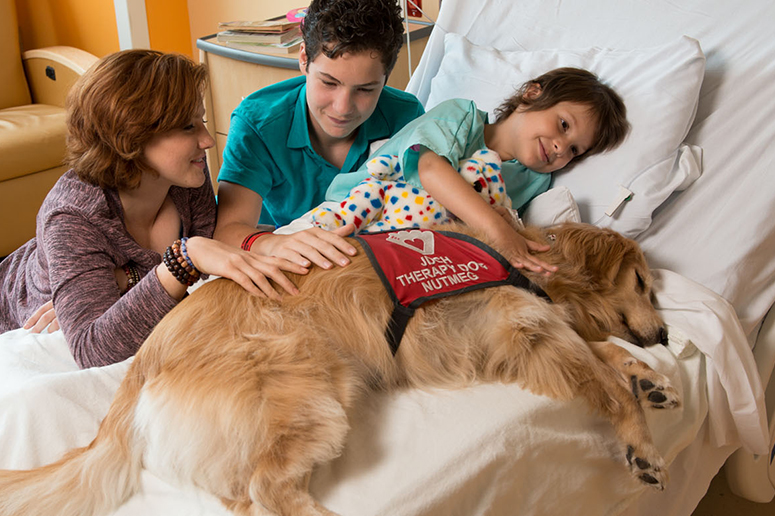
Helping Kids Be Kids, Even in the Hospital
From therapeutic play and music to pet visits and creative activities, our Child Life specialists support your child’s emotional well-being and help make the hospital experience more positive for the whole family.
It matters to you. It matters to us.
Joe DiMaggio Children's Hospital Quality and Safety
See our hospital's patient satisfaction numbers, number of patients and more.
View Quality and SafetyYou have a Right to Know About Prices
We want to give you the information you need to make important healthcare decisions, including the costs of our services.
View PricingMyChart Portal
View test results, schedule follow-up appointments, request prescription refills and more.
Login or Sign-up to MyChart